
Conditions We Help - Foot & Gait Assessments
Welcome to our “Conditions We Help” page, where we aim to provide valuable information about pain that may be related to imbalances in your feet and how we can assist you in finding relief

01
Arch Pain
- Arch pain often develops gradually, presenting as aching, tightness, or fatigue through the arch of the foot, especially after long periods of standing, walking, or working on hard floors.
- Poor foot support is a major contributor, with flat feet, high arches, worn-out shoes, or lack of proper insoles placing excessive strain on the arch structures.
- Targeted support makes a real difference, as orthotic insoles and supportive footwear help redistribute pressure through the foot, reduce strain on the arch, and improve comfort during daily activities.

02
Planter Faciitus
- Plantar fasciitis typically causes sharp heel or arch pain, most noticeable with the first steps in the morning or after periods of rest, easing as the foot warms up but often returning later in the day.
- It develops from repeated strain on the plantar fascia, commonly linked to poor arch support, long hours standing on hard floors, sudden increases in activity, or tight calf muscles.
- Proper support is key to recovery, with orthotic insoles and supportive footwear helping to offload the stressed tissue, reduce heel impact, and allow inflammation to settle when combined with appropriate stretching and strengthening.

03
Knee Pain
- Knee pain often develops from poor lower-limb alignment, showing up as aching, stiffness, or discomfort when walking, climbing stairs, standing for long periods, or at the end of the day.
- Foot mechanics play a major role, as flat feet, overpronation, or unsupportive footwear can cause the leg to rotate, placing extra strain through the knee joint with every step.
- Improving support at foot level helps reduce knee strain, with orthotic insoles and supportive footwear improving alignment, reducing unwanted movement, and easing stress on the knee during daily activities.

04
Back Pain
- Back pain often builds gradually, presenting as stiffness, aching, or discomfort in the lower back, especially after long periods of standing, walking, or sitting.
- Poor foot support can contribute to back pain, as unstable arches or lack of shock absorption allow excessive impact and misalignment to travel up through the knees and hips to the spine.
- Supporting the feet helps support the back, with orthotic insoles and appropriate footwear improving alignment, reducing impact forces, and easing strain on the lower back during everyday movement.

05
Hip Pain
- Hip pain often presents as aching or stiffness in the hip, groin, or outer thigh, commonly worsening after walking, standing, or long days on hard surfaces.
- Foot mechanics can strongly influence hip discomfort, as unstable arches or excessive foot rolling can cause the leg to rotate inward, increasing stress on the hip joint and surrounding muscles.
- Improving support from the ground up can ease hip pain, with orthotic insoles and supportive footwear helping to stabilise movement, improve alignment, and reduce strain through the hips during daily activity.

06
Heel Spurs
- Heel spurs are bony growths that form on the heel bone, often linked to long-term strain and commonly felt as sharp or aching pain under the heel, particularly when standing or walking.
- They usually develop alongside conditions like plantar fasciitis, where repeated pulling on the heel from the plantar fascia and tight calf muscles contributes to irritation and discomfort.
- Reducing stress on the heel is key, with orthotic insoles and supportive footwear helping to cushion impact, redistribute pressure, and reduce strain on the tissues attached to the heel.

07
Achilles Tendinitus
- Achilles tendinitis causes pain and stiffness at the back of the heel or lower calf, often worse first thing in the morning or after activity, and may feel tender to touch.
- It commonly develops from repeated overload, including sudden increases in activity, tight calf muscles, poor foot mechanics, or unsupportive footwear that increases strain on the tendon.
- Improving foot support can reduce tendon strain, as orthotic insoles and appropriate footwear help control excessive foot movement, reduce pulling forces on the Achilles, and support recovery when combined with stretching and strengthening.

08
Shin Splints
- Shin splints cause aching or sharp pain along the inner edge of the shin, often developing during or after walking, running, or long periods on your feet.
- They are commonly linked to repetitive impact and poor foot mechanics, such as overpronation, sudden increases in activity, or inadequate footwear that fails to absorb shock.
- Supporting the feet helps reduce stress on the shin, with orthotic insoles and supportive footwear improving alignment, absorbing impact, and reducing strain through the lower leg during movement.

09
Metatarsalgia
- Metatarsalgia causes pain and burning in the ball of the foot, often described as feeling like you’re walking on a pebble, and typically worsens with standing or walking.
- It develops from excessive pressure on the forefoot, commonly due to poor footwear, lack of cushioning, high arches, or altered foot mechanics that overload the metatarsal heads.
- Reducing forefoot pressure is key to relief, with orthotic insoles and supportive footwear helping to redistribute weight more evenly across the foot and ease stress on the ball of the foot.

10
Morton’s Neuroma
- Morton’s neuroma causes burning, tingling, or sharp pain in the ball of the foot, often between the third and fourth toes, and may feel like standing on a pebble or a folded sock.
- It develops when a nerve becomes irritated or compressed, commonly due to tight or narrow footwear, high-impact activities, or excessive pressure through the forefoot.
- Relieving pressure on the nerve is essential, with orthotic insoles and properly fitted footwear helping to offload the affected area, improve foot mechanics, and reduce symptoms during walking and standing.

11
Sever’s Disease
- Sever’s disease causes heel pain in growing children, most commonly during or after sport, and is often worse with running, jumping, or activity on hard surfaces.
- It develops due to repeated strain at the growth plate in the heel, where tight calf muscles and high activity levels place extra pulling force on the heel bone.
- Reducing strain and impact helps symptoms settle, with supportive footwear, shock-absorbing insoles, and heel support helping to protect the heel while flexibility and strength improve as growth continues.

12
Osgood-Schlatter Disease
- Osgood-Schlatter disease causes pain and swelling just below the kneecap, most commonly in active, growing children and teenagers, especially during running, jumping, or sport.
- It develops from repeated pulling of the patellar tendon on the shinbone, often made worse by rapid growth, tight muscles, and high activity levels.
- Managing load and improving lower-limb support helps, with supportive footwear and orthotic insoles improving alignment and reducing strain through the knee while activity modification and stretching support recovery.
01
Arch Pain
- Arch pain often develops gradually, presenting as aching, tightness, or fatigue through the arch of the foot, especially after long periods of standing, walking, or working on hard floors.
- Poor foot support is a major contributor, with flat feet, high arches, worn-out shoes, or lack of proper insoles placing excessive strain on the arch structures.
- Targeted support makes a real difference, as orthotic insoles and supportive footwear help redistribute pressure through the foot, reduce strain on the arch, and improve comfort during daily activities.
02
Planter Faciitus
- Plantar fasciitis typically causes sharp heel or arch pain, most noticeable with the first steps in the morning or after periods of rest, easing as the foot warms up but often returning later in the day.
- It develops from repeated strain on the plantar fascia, commonly linked to poor arch support, long hours standing on hard floors, sudden increases in activity, or tight calf muscles.
- Proper support is key to recovery, with orthotic insoles and supportive footwear helping to offload the stressed tissue, reduce heel impact, and allow inflammation to settle when combined with appropriate stretching and strengthening.
03
Knee Pain
- Knee pain often develops from poor lower-limb alignment, showing up as aching, stiffness, or discomfort when walking, climbing stairs, standing for long periods, or at the end of the day.
- Foot mechanics play a major role, as flat feet, overpronation, or unsupportive footwear can cause the leg to rotate, placing extra strain through the knee joint with every step.
- Improving support at foot level helps reduce knee strain, with orthotic insoles and supportive footwear improving alignment, reducing unwanted movement, and easing stress on the knee during daily activities.
04
Back Pain
- Back pain often builds gradually, presenting as stiffness, aching, or discomfort in the lower back, especially after long periods of standing, walking, or sitting.
- Poor foot support can contribute to back pain, as unstable arches or lack of shock absorption allow excessive impact and misalignment to travel up through the knees and hips to the spine.
- Supporting the feet helps support the back, with orthotic insoles and appropriate footwear improving alignment, reducing impact forces, and easing strain on the lower back during everyday movement.
05
Hip Pain
- Hip pain often presents as aching or stiffness in the hip, groin, or outer thigh, commonly worsening after walking, standing, or long days on hard surfaces.
- Foot mechanics can strongly influence hip discomfort, as unstable arches or excessive foot rolling can cause the leg to rotate inward, increasing stress on the hip joint and surrounding muscles.
- Improving support from the ground up can ease hip pain, with orthotic insoles and supportive footwear helping to stabilise movement, improve alignment, and reduce strain through the hips during daily activity.
06
Heel Spurs
- Heel spurs are bony growths that form on the heel bone, often linked to long-term strain and commonly felt as sharp or aching pain under the heel, particularly when standing or walking.
- They usually develop alongside conditions like plantar fasciitis, where repeated pulling on the heel from the plantar fascia and tight calf muscles contributes to irritation and discomfort.
- Reducing stress on the heel is key, with orthotic insoles and supportive footwear helping to cushion impact, redistribute pressure, and reduce strain on the tissues attached to the heel.
07
Achilles Tendinitus
- Achilles tendinitis causes pain and stiffness at the back of the heel or lower calf, often worse first thing in the morning or after activity, and may feel tender to touch.
- It commonly develops from repeated overload, including sudden increases in activity, tight calf muscles, poor foot mechanics, or unsupportive footwear that increases strain on the tendon.
- Improving foot support can reduce tendon strain, as orthotic insoles and appropriate footwear help control excessive foot movement, reduce pulling forces on the Achilles, and support recovery when combined with stretching and strengthening.
08
Shin Splints
- Shin splints cause aching or sharp pain along the inner edge of the shin, often developing during or after walking, running, or long periods on your feet.
- They are commonly linked to repetitive impact and poor foot mechanics, such as overpronation, sudden increases in activity, or inadequate footwear that fails to absorb shock.
- Supporting the feet helps reduce stress on the shin, with orthotic insoles and supportive footwear improving alignment, absorbing impact, and reducing strain through the lower leg during movement.
09
Metatarsalgia
- Metatarsalgia causes pain and burning in the ball of the foot, often described as feeling like you’re walking on a pebble, and typically worsens with standing or walking.
- It develops from excessive pressure on the forefoot, commonly due to poor footwear, lack of cushioning, high arches, or altered foot mechanics that overload the metatarsal heads.
- Reducing forefoot pressure is key to relief, with orthotic insoles and supportive footwear helping to redistribute weight more evenly across the foot and ease stress on the ball of the foot.
10
Morton’s Neuroma
- Morton’s neuroma causes burning, tingling, or sharp pain in the ball of the foot, often between the third and fourth toes, and may feel like standing on a pebble or a folded sock.
- It develops when a nerve becomes irritated or compressed, commonly due to tight or narrow footwear, high-impact activities, or excessive pressure through the forefoot.
- Relieving pressure on the nerve is essential, with orthotic insoles and properly fitted footwear helping to offload the affected area, improve foot mechanics, and reduce symptoms during walking and standing.
11
Sever’s Disease
- Sever’s disease causes heel pain in growing children, most commonly during or after sport, and is often worse with running, jumping, or activity on hard surfaces.
- It develops due to repeated strain at the growth plate in the heel, where tight calf muscles and high activity levels place extra pulling force on the heel bone.
- Reducing strain and impact helps symptoms settle, with supportive footwear, shock-absorbing insoles, and heel support helping to protect the heel while flexibility and strength improve as growth continues.
12
Osgood-Schlatter Disease
- Osgood-Schlatter disease causes pain and swelling just below the kneecap, most commonly in active, growing children and teenagers, especially during running, jumping, or sport.
- It develops from repeated pulling of the patellar tendon on the shinbone, often made worse by rapid growth, tight muscles, and high activity levels.
- Managing load and improving lower-limb support helps, with supportive footwear and orthotic insoles improving alignment and reducing strain through the knee while activity modification and stretching support recovery.
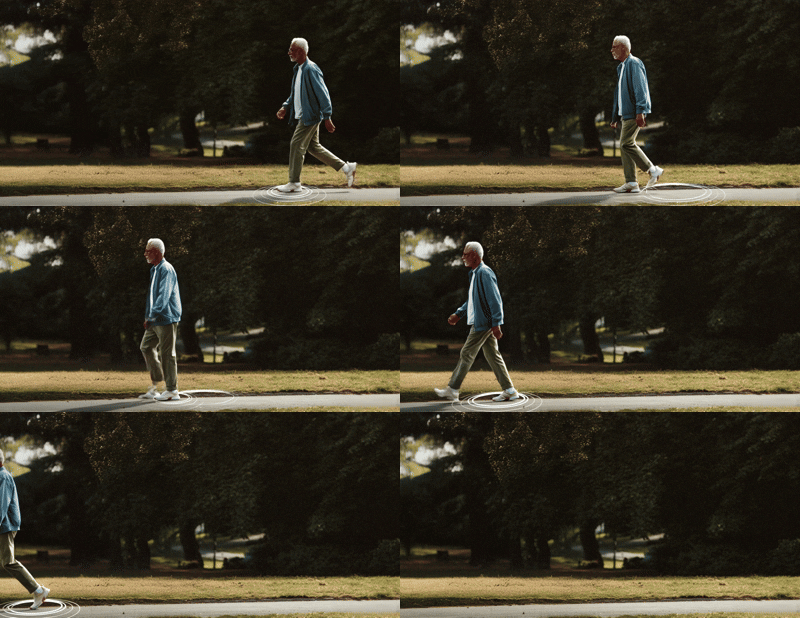
Don’t let foot pain hold you back
Take the first step toward lasting comfort with expert care at Step Right Foot Clinic.