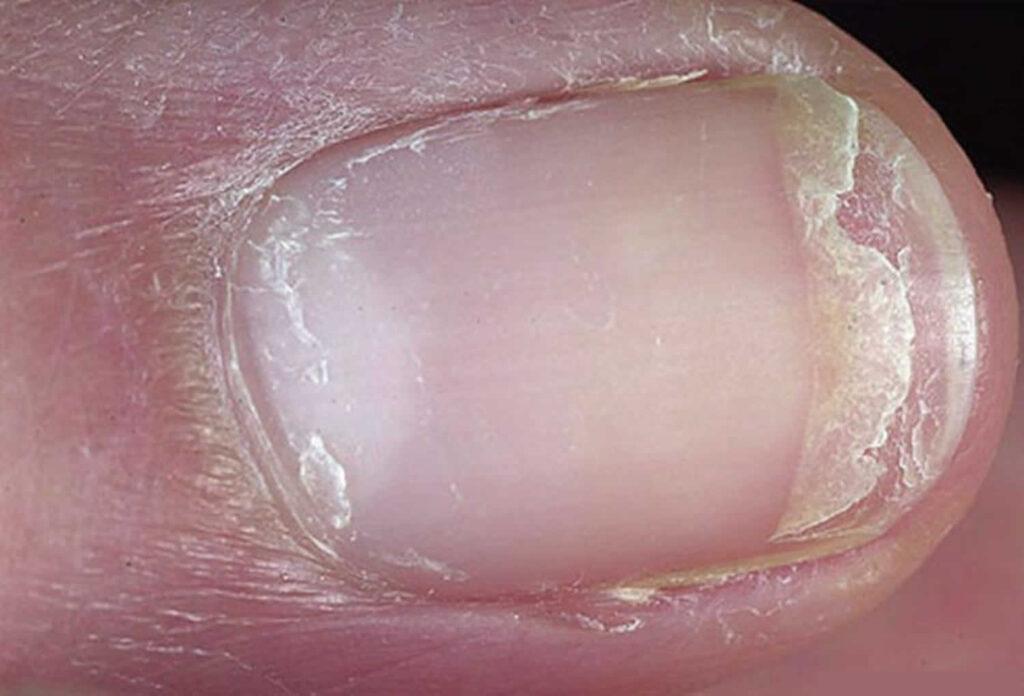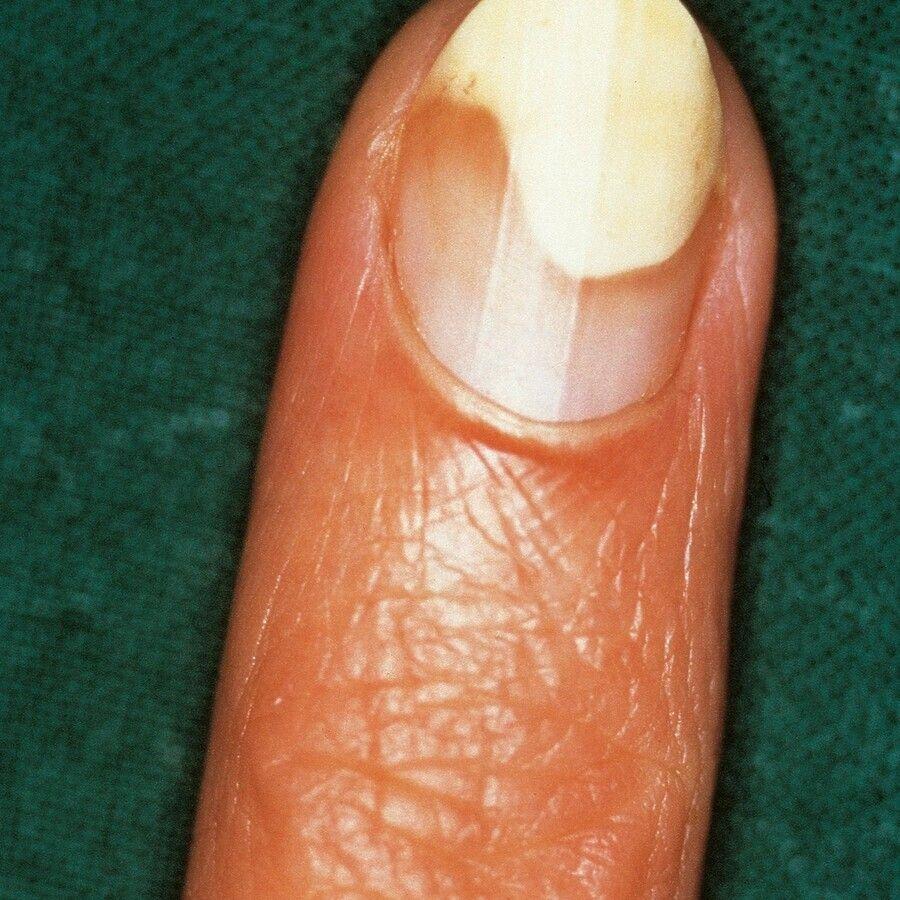
Part of your nail has turned white and there’s a gap underneath. It catches on things, it looks alarming, and the instinct is to cover it, file it smooth or clean under it. Unfortunately, those are usually the things that keep it lifting.
Nail lifting has a medical name, onycholysis, and it’s far more common than most people realise, especially since gel polish, BIAB and acrylics became part of everyday life. The good news is that, managed correctly, the nail can grow back attached and healthy.
The short answer
The lifted part of the nail won’t stick back down. Recovery happens as new, attached nail grows forward from the base and replaces it. Your job is to stop whatever keeps disturbing the nail, protect the exposed area, and keep the new growth flexible. A fingernail takes about 4–6 months to grow out fully, a big toenail 12–18 months.
In this article
1What Is Nail Separation?
Normally the nail plate sits firmly on the nail bed, which keeps it pink and protected. When that seal is disrupted, by a knock, over-filing, chemicals, repeated pressure or infection, a small gap forms. Air gets in and that part of the nail looks white or opaque. Moisture and debris can then collect underneath.
It usually starts at the tip and can creep back towards the cuticle if whatever caused it carries on.
The nail bed and the nail don’t re-bond. The separated section has to grow out, which is why protecting the new growth matters more than fixing the old.
2What Causes It
Fingernails
- Repeated gel, BIAB or acrylic application and removal, especially without a break
- Over-filing or buffing during nail preparation, which thins the nail
- Picking or peeling product off
- Long periods with wet hands, or frequent contact with cleaning products
- Catching or knocking a long nail, or using nails as tools
Toenails
- Shoes that are too short, narrow or shallow, so the toe keeps meeting the front of the shoe
- Running, hillwalking and sports with lots of stopping and turning
- A single injury, such as stubbing the toe or dropping something on it
- A previous or current fungal infection
From Moncie · nail technician
At the nail desk I see it all the time. Clients don’t realise how thin and dehydrated their natural nail has become until it starts to lift. Covering it again with more product usually makes it worse.
Less often, nail lifting is linked to skin conditions such as psoriasis, thyroid problems or certain medications. If several nails lift without an obvious cause, it’s worth getting checked (see the box further down).
3Is It Fungus or Damage?
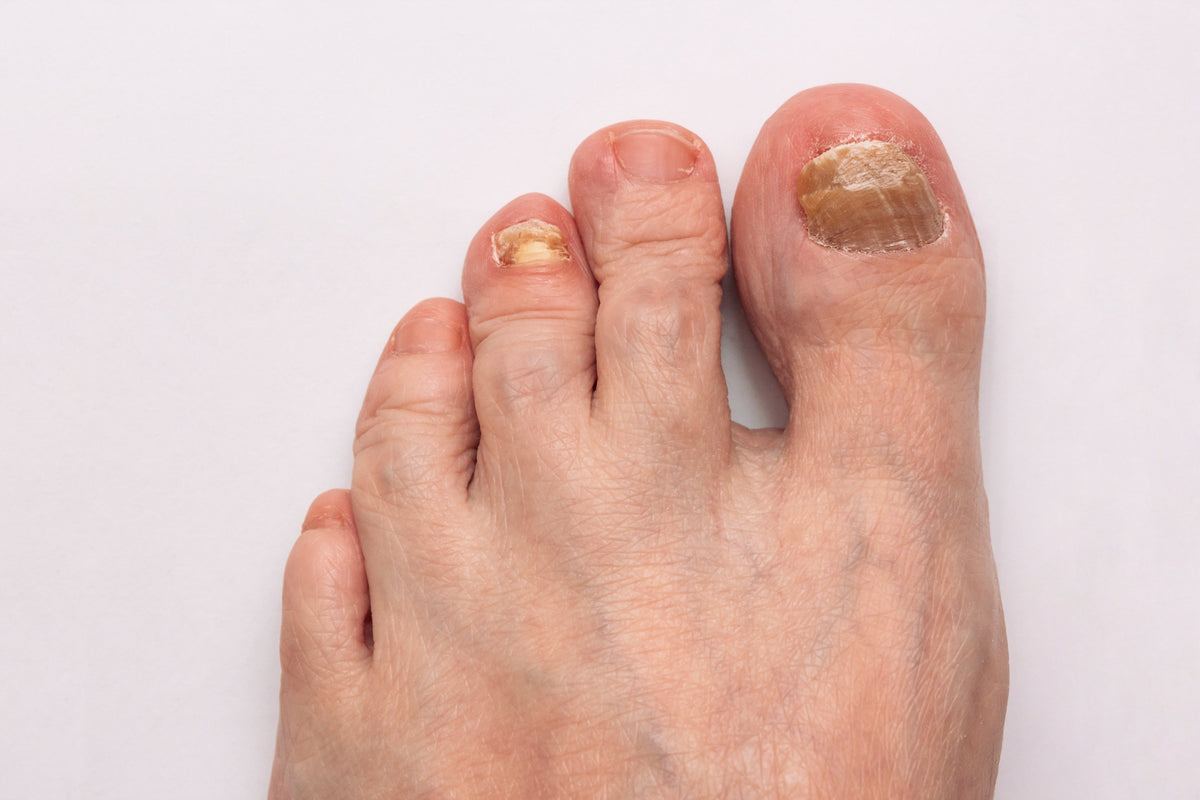
A lifted nail can look yellow, collect debris and thicken at the tip, so it can easily be mistaken for a fungal nail. Sometimes fungus is involved, sometimes it’s purely damage, and often it’s both: the gap under a lifted nail is a sheltered, damp space where fungus can take hold.
Signs fungus may be involved
- The nail is thickening, not just lifting
- A yellow-brown colour, rather than plain white
- Crumbly debris under the nail
- The problem spreads to other nails
If these sound familiar, read Why Is My Fungal Nail Infection Not Going Away? A podiatrist or GP can confirm it with a small nail clipping test.
4What Helps a Lifting Nail Recover
This is the approach in our Nail Separation Recovery Plan, from Chapter 5 of our free guide, The Nail Cure. It has three parts: remove the stress, protect the nail, and condition the new growth.
Step 1: Remove the stress
- ✓Pause all enhancements. Remove gels, BIAB, acrylics and polish until the nail has recovered. Covering a lifted nail traps moisture and hides your progress.
- ✓Keep the nail short. Trim the loose, fully detached part carefully so it can’t catch. Never cut back into nail that is still attached.
- ✓Leave the gap alone. Don’t scrape, dig or “clean” under the nail. It pushes the nail further off the bed and can let bacteria or fungus in.
- ✓Keep it dry. Wear gloves for washing up and cleaning, and dry your hands and feet thoroughly.
- ✓File gently. Smooth sharp edges only, and avoid thinning the surface.
Step 2: Protect the nail with Formula 3®
Formula 3® is an antifungal solution in a penetrating oil base that also conditions the nail and the skin around it. Apply it to the nail, the free edge and the surrounding skin once a day, or twice a day if you think fungus is involved. Its oil base reaches the nail plate and the skin around it, helping keep the exposed area protected while new nail grows forward.
Step 3: Condition the new growth with Myrrhage®
A lifting nail is usually dry and rigid, and a rigid nail keeps cracking and lifting. A flexible nail grows forward more smoothly. Myrrhage® Nail Serum is a plant-based serum that conditions the nail and cuticle. Massage it into the nail and cuticle every evening until absorbed.
Your daily routine
- Morning: keep nails short and clean, then apply Formula 3®
- Evening: Formula 3® again if fungus is suspected; massage in Myrrhage® before bed
- Always: no enhancements, gloves for wet jobs, leave the gap alone
- Monthly: take a progress photo from the same angle and in the same light
5Toenails: Check Your Shoes
With toenails, repeated pressure from footwear is one of the most common reasons lifting starts and keeps going. Each step can give the nail a tiny knock against the front or top of the shoe. On its own that’s nothing, but over thousands of steps a day it adds up.
A quick shoe-fit check you can do at home
Do it later in the day, when your feet are at their largest, and always standing, not sitting. Feet lengthen and spread when they take your weight.
- ✓Stand up straight with your heel settled into the back of the shoe.
- ✓Feel where your longest toe sits. You want about a finger’s width (roughly 1 cm) of space in front of it.
- ✓Can’t bend down comfortably? If the footbed lifts out, put it flat on the floor and stand on it with your heel in place. If there’s no visible insole in front of your longest toe, the shoe is probably too short.
- ✓Length isn’t everything. Check the toe box is wide and deep enough that your toes aren’t squeezed from the sides or pressed from above.
This is a screening check, not a full fitting. Footbeds don’t always match the inside of the shoe exactly, so if you’re unsure, a professional fitting is worthwhile.
Breathable socks help too, because a damp environment under a lifted toenail is exactly what fungus likes.
6What to Expect, and When
| When | What you can expect |
|---|---|
| 4 weeks | The nail feels less fragile and the lifting stops spreading. |
| 8 weeks | Healthier, attached nail is visible at the base. |
| 3–4 months | A clear section of attached nail has replaced the damaged part. |
| Full recovery | Fingernail: 4–6 months. Big toenail: 12–18 months. |
Judge progress by the attached nail growing out from the base, not by the white section. The white part won’t change; it will simply be trimmed away as the healthy nail reaches the tip.
7Common Mistakes That Slow Recovery
- Putting another set of gels or acrylics on top to hide it. It looks better for a fortnight and sets recovery back.
- Cleaning under the nail with a file or orange stick.
- Cutting back to the lifted line, which can take attached nail with it.
- Stopping the routine once the nail looks a bit better. The nail is still growing out.
- Ignoring the cause, such as tight shoes, wet work without gloves, or picking.
When to get professional advice
If the nail or the skin around it is painful, red, warm or swollen, has a new dark streak, or if you have diabetes, poor circulation or reduced immunity, please get professional advice before treating it yourself. The same applies if several nails are lifting with no obvious cause.
Ready to start your recovery?
The Nail Separation Recovery Plan, in one bundle
Formula 3® and Myrrhage® Nail Serum together in our Nail Repair bundle, with a saving on buying them separately.
Shop the Nail Repair bundle Get the free guideYou may also find our article Why Is My Fungal Nail Infection Not Going Away? helpful.
Important: This article provides general educational information and does not replace advice from your doctor, pharmacist or podiatrist. Always read and follow the directions on product labels.